Publications
Oostewald van Niekerk
3rd Sep, 2026
Disclaimer: As an author, I am fully aware of the newer 2024 Guideline tariff of Professional Fees for Quantity Surveyors. However, it is my personal opinion that these latest fee scales run high and ultimately attract unrealistic discounts.
Commentary on the 2015 Guideline Tariff of Professional Fees for Quantity Surveyors
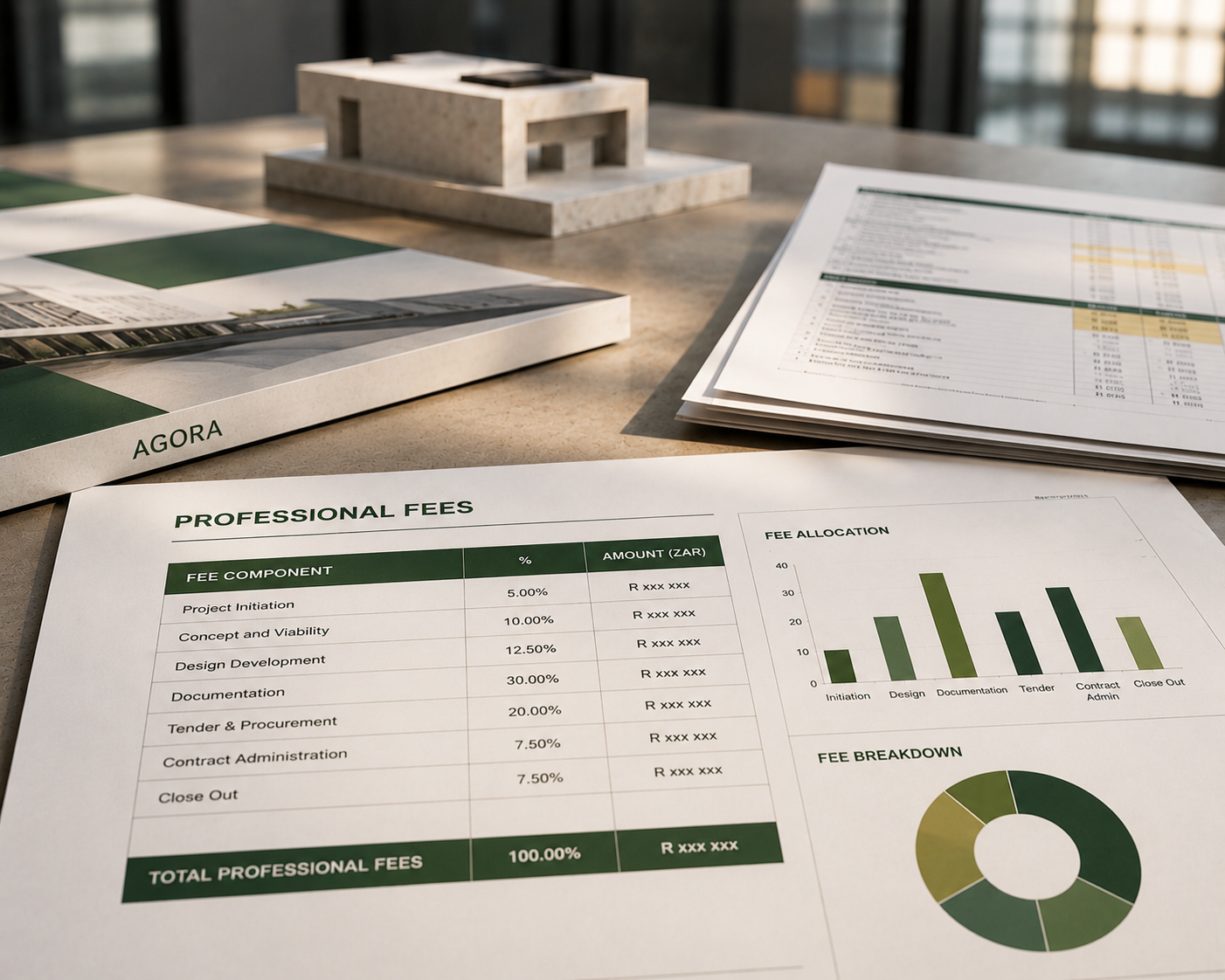
It should be stated that the guideline tariff of professional fees for the QS profession is exactly that—a Guideline. It provides both the professional and the client with an equitable basis for determining the scope of work required for a building project, suggesting a suitable fee and disbursement structure.
Crucially, the guideline tariff opens the door for healthy competition within our profession. It remains the prerogative of the professional and the client to negotiate and agree on a suitable fee and service to be rendered. When doing this, both parties must take full cognizance of the risks associated with a fee that is either too low or too high for a specific service.
The guideline fee itself is calculated using tables based on a basic fee (calculated on the value for fee purposes) and a secondary fee using a described percentage. For the purposes of this blog, I won't dive into the basic calculation. However, I do need to highlight clause 10.49 on how to determine the value for fee purposes, and remind fellow Quantity Surveyors to make an adjustment for mechanical and electrical installations, as well as civil engineering works - ancillary to building works in terms of clauses 10.10 and 10.24.
Additional Services
As Quantity Surveyors, we prefer to work with Bills of Quantities (BoQ). Therefore, this commentary focuses specifically on projects where a BoQ is applicable.
When compiling your proposals, I suggest adding the following allowances to your standard fee calculation:
Services at Risk
It is often expected that professionals render services at risk. It is recommended that should the project proceed within two years of completing these risk services, the QS must be appointed for the project and invoice for the stages previously rendered at risk. Alternatively, the QS can charge a flat fee of 20% of the projected QS fee for the project.
It is my strong opinion that each consultant must carefully consider their position when agreeing to services on risk, as one can easily be taken advantage of. If one consult with a doctor or an attorney, you pay upfront for the institutional knowledge and experience of that professional. Therefore, as a Quantity Surveyor who values his own worth, I tread very lightly when working on risk. This is something for each company to consider and determine their own position on. Personally, I would like to see an industry shift from working on risk to "time invested work," where a time-based fee would be far more appropriate. This way, both the client and the consultant show true confidence in the project and the service. I believe this shift might alter the trajectory of developments for the better.
Excessive Variation
When project scopes change significantly, your fee should reflect the extra work:
Services Cancelled
Under the guidelines, the fee for services completed is calculated normally, and the fee for services partially completed is pro-rated. Should the QS’s services be cancelled after the commencement of Stage 4, a 10% surcharge is payable on the agreed or appointed fee. If the project or services are reinstated or resumed within a period of one year from the date of termination, this surcharge will be considered a partial payment of the overall fee. For context, cancellation or termination is defined as services being suspended for a period of more than 180 calendar days.
Extraordinary Contract Provisions & Time Charges
The QS is permitted to charge an additional time-based fee for extraordinary contract provisions that cause extra work not covered elsewhere in the Guideline Tariff. Examples of this include managing multiple direct payments to subcontractors or suppliers, or processing more than one payment certificate per month.
For time charges, the National and Provincial Government Departments guideline of rates per hour is followed based on these professional categories:
These time charges are deemed to include business overheads as well as work done by clerical personnel. It is worth noting that subsequent to the 2015 guideline tariff, the SACQSP has issued a 2024 guideline time charge which gives a much more direct guideline and a reasonable hourly fee to charge for registered professionals.
Conclusion
At best, the Guideline tariff of professional fees is a schedule and a guideline. It provides a fair platform for the professional and client to start negotiations on remuneration. Ultimately, it is up to the professional and the client to determine discounts and the basis on which those discounts will be applied.
Should a professional elect to render a limited service to a client, it remains the professional’s responsibility to highlight the risks of that limited service. Likewise, it remains the client's responsibility to accept such a discount given those risks.
EARLIER POSTS
.png)
More Than Numbers
21st Sep, 2026
Professional Fees for Quantity Surveyors
3rd Sep, 2026

Artificial Intelligence is leading the biggest shakeup in the Built Environment!
8th Jul, 2026

Why Variation Orders Can Make or Break a Construction Project
2nd Jun, 2026

Joining a Project Mid-Construction: Lessons Beyond the Textbooks
7th May, 2026

Constructability: The Blind Spot Between Design and Delivery
8th Apr, 2026
.png)
Project Communication: The Foundation Of Construction Project Management
25th Feb, 2026
.png)
From Measurement to Strategy: How the Modern South African QS Adds Value Beyond Cost Control
17th Oct, 2025
.png)
The AI Co-Pilot: Revolutionizing a Construction Project Manager's Day
16th Sep, 2025

Training at AGORA: Real Voices, Real Growth
8th May, 2025