Publications
Melisande Heynecke
8th Jul, 2026
Schools. Hospitals. Malls. Roads. Parks. Homes.
That is just a few examples of physical spaces created or modified by humans to support living, working, and recreation.
The built environment influences human behaviour, health, and social equity. It affects physical activity, access to food, housing quality, and exposure to environmental hazards. Urban design and infrastructure can either enhance safety, productivity, and well-being or contribute to pollution, congestion, and social inequities. It also plays a role in climate change adaptation, sustainability, and environmental justice.
Every structure around us is a testament to human ingenuity. From the initial vision of architects and engineers to the precise execution of project managers, quantity surveyors, and builders. Every brick laid and every yard of concrete poured represents the power of human collaboration.
But something is happening, something we all thought was just in the movies.
Artificial Intelligence.
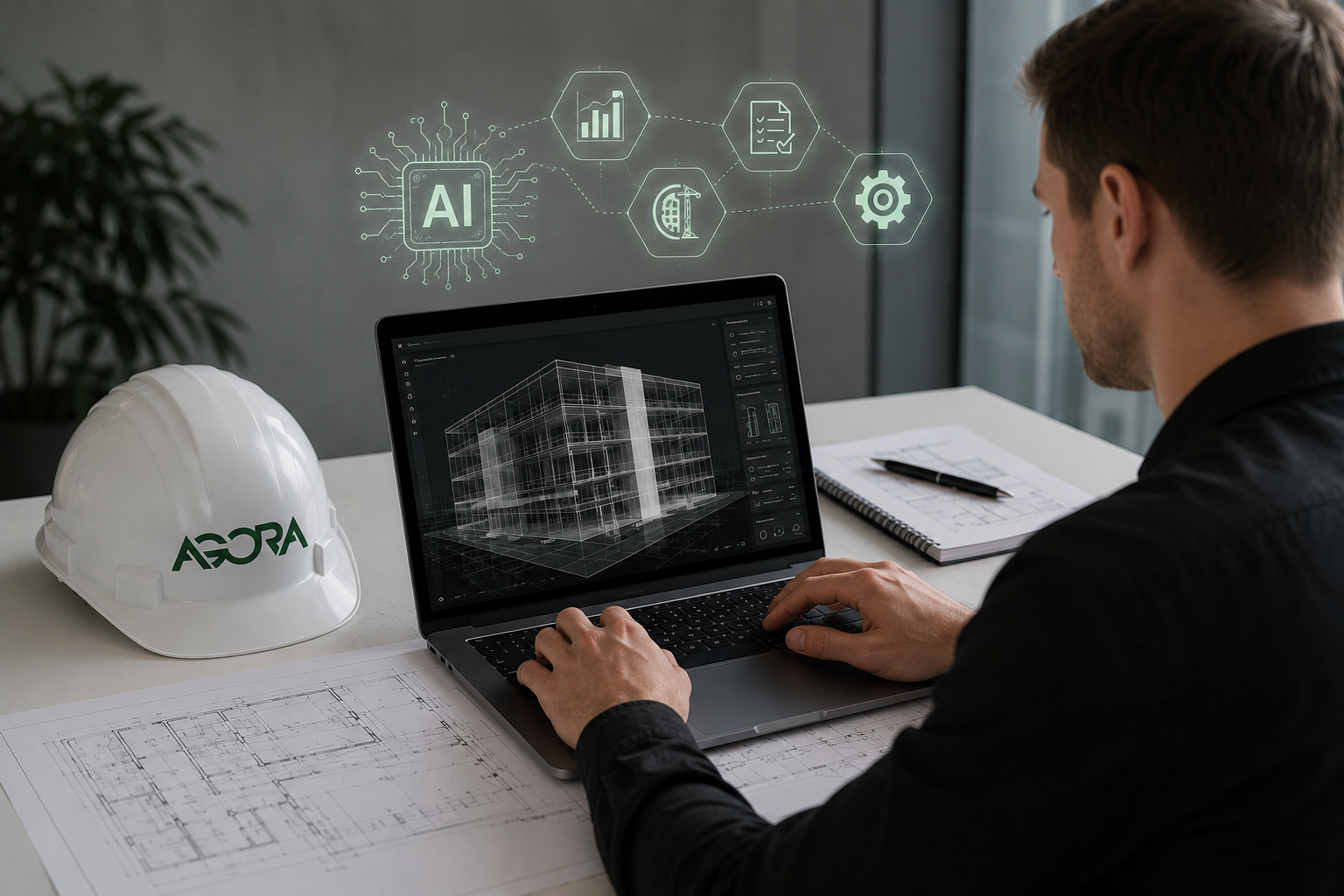
With the rapid evolution of AI and automation tools, a single, tech-proficient operator can now comfortably manage the workload that used to require an entire department of three people.
A decade or so ago, the entire built environment was gripped by a massive wave of panic and hype surrounding the rise of BIM. The industry prophets stood at podiums and declared that traditional professionals, particularly Quantity Surveyors and traditional Architectural Technologists, were on the verge of extinction. The narrative was simple, clean, and entirely wrong: “Once everything is designed in a fully integrated, multi-dimensional digital model. The computer will automatically generate bills of quantities at the click of a button, making the manual surveyor obsolete”. Every major firm rushed to purchase expensive software licenses, scrambled to upskill their teams, and waited for the magic to happen.
But what actually happened when BIM hit the ground in the commercial construction industry?.
It didn’t replace the Quantity Surveyor. It didn’t automate away the human brain. Instead, BIM evolved into what it actually is today: an incredibly useful, standardized tool for collaboration.
In reality, for the vast majority of firms, BIM became a sophisticated source for quantity surveyors and architects to open each other’s drawings. Coordinating spatial data, ironing out structural clashes, and then proceeding to do their respective professional work.
The software didn’t do the thinking. It didn’t possess the contextual human logic required to understand the nuances of a complex, live construction site, the volatile shifts in supply chain pricing, or the local realities of the South African labour market. The model was only ever as good as the data fed into it, and human interpretation remained the crown jewel of the entire process. BIM didn’t take over the industry; it became a baseline tool that humans used to do their jobs more transparently.
There is a massive, polarizing divide happening in operations. On one side, you have traditional managers who view AI with deep suspicion, treating it either as a dangerous threat to job security or as a cheap, lazy gimmick used by employees to duck hard work.
On the other side, you have a new generation of professionals who look at a manual, repetitive administrative task and think: “Why am I wasting human cognitive energy on this when I can train a digital tool to execute it in four seconds?”
This refusal to do manual grunt work isn’t born out of laziness. It is born out of a refusal to waste valuable human brainpower on tasks that a machine can do faster, sharper, and with zero-error precision.
Just like BIM before it, AI is not going to magically walk onto a construction site, manage a client dispute, or independently compile a bulletproof tender submission from scratch. It doesn’t possess human discretion. Instead, the true power of AI lies in its ability to act as the ultimate operational source.
At AGORA, the objective isn’t to let AI run the business; it’s about learning exactly how to handle the tool so that it works entirely for us.
When you weaponize AI to handle the heavy, soul-crushing baseline work, such as instant data sorting and contract cross-referencing, predictive maintenance scheduling, and immediate analysis of historical pricing trends. You completely shift the power dynamic of the workplace when a modern, tech-proficient employee doesn’t use these systems as a shortcut to achieve a “soft life” or to do less. They use them as a massive technological power-up. They clear the administrative clutter off their desks in record time so they can spend their actual energy sitting in the driver’s seat as high-level, strategic operators.
But this can create a massive point of operational friction, and it is a debate that the built environment desperately needs to have out in the open. When a single employee learns how to leverage digital tools to finish a multi-hour data collation task in thirty minutes, a massive corporate dilemma arises.
If one person can utilize digital leverage to deliver the strategic value, flawless accuracy, and commercial output that used to require three separate desks, they have fundamentally rewritten the value of a standard workday. Output, not presence, must be the only metric that matters.
The firms that survive the next decade in this volatile economic climate won’t be the ones demanding their teams grind away at administrative tasks the old-fashioned way just to maintain the illusion of a traditional corporate hierarchy. It will be the firms that actively adapt to the lean machine model.
When we look at our quantity surveying demands and project management pipelines, we have to realize that the old way of scaling up, simply throwing more human bodies at a problem, is inefficient and financially draining.
By teaching our systems to serve us, we ensure that every single hour spent on a project is packed with high-value execution, not administrative filler.
References:
Adebayo, Y., 2024. Artificial Intelligence in Construction Project Management: A Structured Literature Review of Its Evolution in Application and Future Trends. Smart Cities, 5(3), pp. 26-45.
Marović, I., 2026. Artificial Intelligence and Building Information Modelling for Sustainable Construction Project Management and Digitalization in Construction. Buildings, 16(4), pp. 846-865.
Olatunde, N.A., 2026. Unpacking trends in artificial intelligence research in the construction industry: a bibliographic review. Frontiers in the Built Environment, 12, pp. 1-18.
Valdebenito, R., 2025. Integrating Artificial Intelligence and BIM in Construction: Systematic Review and Quantitative Comparative Analysis. Applied Sciences, 15(23), pp. 12470-12492
Jafary, P., 2026. Artificial intelligence (AI) and machine learning in building information modeling (BIM)-based construction cost estimation: a systematic review. International Journal of Digital Earth, 19(1), pp. 265-283.
Saka, A.B., Ayinla, K., Cheung, F., Sawhney, A., Graham, A., Garner, J., Saleeb, N., Akinradewo, O.I. and Golding, R., 2026. AI for Quantity Surveying Report: Exploring Impact, Building Competence, and Advancing Responsible Use. Project Report. Birmingham City University: AI4QS Initiative.
Bikwa, G., 2025. Exploring the Challenges and Opportunities of AI in Decision-Making in Construction Project Management. Journal of the South African Institution of Civil Engineering, 67(4), pp. 15-28.
EARLIER POSTS
.png)
More Than Numbers
21st Sep, 2026

Professional Fees for Quantity Surveyors
3rd Sep, 2026
Artificial Intelligence is leading the biggest shakeup in the Built Environment!
8th Jul, 2026

Why Variation Orders Can Make or Break a Construction Project
2nd Jun, 2026

Joining a Project Mid-Construction: Lessons Beyond the Textbooks
7th May, 2026
Constructability: The Blind Spot Between Design and Delivery
8th Apr, 2026
.png)
Project Communication: The Foundation Of Construction Project Management
25th Feb, 2026
.png)
From Measurement to Strategy: How the Modern South African QS Adds Value Beyond Cost Control
17th Oct, 2025
.png)
The AI Co-Pilot: Revolutionizing a Construction Project Manager's Day
16th Sep, 2025

Training at AGORA: Real Voices, Real Growth
8th May, 2025